
Coffee Roast Levels Explained: What Roast Labels Can and Cannot Tell You


Coffee roast level is one of the first things people look for when choosing a bag of coffee. Light, medium, and dark are straightforward indicators and each label can provide a helpful starting point. But the roast label alone does not tell the entire story of how a coffee will taste.
At Trinidad Coffee Company, we approach roasting as a way to develop and highlight what is already present in the coffee. Origin, variety, processing, bean quality, roast development, and brewing all influence the final cup. Two coffees displaying the same roast label can taste quite different.
Understanding roast levels is less about memorizing fixed flavor rules and more about recognizing what changes as coffee develops in the roasting drum, what remains unique to the beans themselves, and where the roast label stops being useful.
What a Roast Level Actually Describes
Light, medium, and dark designations are broad categories describing how far a coffee has been developed during roasting. They are helpful indicators of roast degree, but they are not universal technical standards.
One roaster's medium roast may look or taste lighter than another's. A coffee labeled medium-dark by one company might be labeled dark elsewhere. Bean color matters, but it is only one part of the evaluation.
During roasting, coffee undergoes a complex series of chemical reactions, its cellular structure expands, it loses moisture, and it changes color. Sugars and amino acids react, aromatic compounds form and change, and the bean becomes increasingly porous and soluble as roast development continues.
This is where roasting becomes both technical and sensory. Trinidad Coffee Company's Art & Science of Specialty Coffee Roasting explains how the process combines physical changes with tasting and evaluation. Measurements can help guide a roast, but the cup ultimately shows whether the profile suits the coffee.
A roast level is therefore best understood as a description of development rather than a guarantee of flavor.
What Changes From Light to Medium to Dark Roasts
As roast development progresses, the characteristics associated with the green coffee and flavors created during roasting gradually take shape and become more defined.
Light-roasted coffees tend to preserve more of the aromatic and flavor qualities associated with origin and processing. Depending on the coffee, the cup may present floral, fruit, citrus, tea-like, or other delicate characteristics. Acidity may also be more prominent.
This does not mean every light roast will taste bright or fruity. Roasting cannot create characteristics that were not present in the beans to begin with, especially attributes that are shaped by the coffee’s native soil and growing conditions.
Medium roasting allows more development while preserving much of the coffee's identity. Sweetness, body, and caramelized characteristics may become more apparent, while fruit, floral, citrus, cocoa, spice, or nut notes can emerge.
This is why medium roast coffee encompasses such a wide range of characteristics. A medium coffee can be lively and aromatic or round, chocolate-toned, and full-bodied. Roast color alone cannot adequately describe the variety of flavors and nuances that medium roasts offer.
As coffee progresses darker in color, roast-driven characteristics become more prominent. Deeper caramelization, heavier body, lower perceived brightness, bittersweet cocoa, toasted sugar, spice, or smoky impressions may develop depending on the coffee and the roast color.
There is more to the progression than simple assumptions, such as light roasts are acidic, medium roasts are more balanced, and dark roasts are bitter. A carefully developed dark roast will be far from harsh, just as a light roast will not always be super bright.
It All Starts With the Coffee
Roasting transforms coffee, but the final cup begins with the beans themselves.
Variety, growing elevation, climate, soil, moisture, density, cherry ripeness, processing method, storage, and overall green coffee quality all affect how a coffee responds to heat. Those factors also influence the characteristics that are available for the roaster to develop.
Two coffees can behave differently during roasting and taste very different when brewed, even though they are roasted to a similar color.
A washed coffee from Central America might present acidity, sweetness, and cocoa at a particular roast level. A naturally processed Ethiopian coffee taken to a similar degree of development can display more fruit-driven aromatics and a different texture or finish.
Blends introduce more layers of flavor and offer levels of complexity not naturally found in nature. When coffees from different origins or farms are skillfully blended, they create a unique combination of sweetness, body, acidity, aroma, or depth. A wide range of cup profiles is available within the same roast category because the beans themselves are different.
Going by roast level alone will only point you in a general direction and not reveal specific characteristics. The label can indicate roast development, but the origin, processing, and composition determine what flavors and nuances were available to develop in the first place.
Trinidad Coffee Company's guide to choosing better coffee beans explores the broader relationship between sourcing, roasting, freshness, and brewing. Considering these factors together provides more insight into a coffee’s character than color alone.
Why Roast Level Does Not Signal Coffee Strength
Dark roast is often equated with stronger coffee, but strength can mean different things.
If strength refers to the concentration of the finished beverage, the brewing ratio is a major factor. Using more coffee relative to water creates a more concentrated cup regardless of whether the beans are roasted light, medium, or dark.
If strength is taken to mean flavor intensity, dark roasting can create a pronounced roast character that some drinkers perceive as a stronger brew. But a concentrated light or medium roast can also taste very intense.
Bitterness works the same way. Darker roast development can make roast-related bitterness more noticeable, but the coffee’s intrinsic characteristics and the way it is brewed also have important roles. Grind size, water temperature, contact time, brewing ratio, and technique are also factors when it comes to bitterness in the cup.
Acidity is also more nuanced than roast labels indicate. Lighter roasting often preserves more of the coffee’s natural brightness and aromatics, while further roast development changes how those qualities are perceived. Origin and brewing still matter.
Caffeine is another element of coffee where simple roast comparisons can be misleading. Caffeine content depends more on dose, coffee density, beverage size, and brewing method than on roast color. As a general rule, roast color has little impact on how much caffeine ends up in the brewed cup.
Brewing Changes How a Roast Presents Itself
No matter its roast level when a coffee leaves the roastery, the brewing method influences how its characteristics are presented in the final cup.
Paper-filtered methods can produce a cleaner cup with greater flavor definition because much of the oil and fine material remains in the filter. A French press allows these components to pass through into the beverage, often increasing perceived body and texture.
Espresso concentrates flavor into a small beverage volume, so acidity, sweetness, bitterness, aromatics, and roast character can all feel more intense. Automatic drip brewing may emphasize balance when the grind, water, ratio, and batch size are appropriate.
Solubility also changes with roast development. Darker-roasted beans are generally more porous and therefore extract more readily than lighter coffees. A brewing recipe that works well for a dark roast may therefore need adjustment for a denser light roast.
A medium roast may taste bright and refined in a pour over but rounder and heavier when brewed in a French press. A dark roast may taste overly bitter if brewed too aggressively, while a lighter coffee that is underextracted can present a thin or sharp profile.
Roast level provides useful context, but ultimately, brewing determines how much of a coffee’s flavor potential reaches the cup.
How to Use Roast Labels More Effectively
Roast labels are useful because they help narrow a large field of choices.
Someone who consistently enjoys deeper caramelized flavors, fuller body, and prominent roast character may opt for a medium-dark or dark roast coffee. For floral aromatics, lively acidity, or more origin expression, the lighter end of the roasting spectrum may be the best place to start.
The next step is to look beyond the label.
Consider the coffee’s flavor notes, origin, processing method, blend composition, and recommended brewing method. Then taste the coffee and pay attention to what actually stands out.
Does the cup feel light, round, or heavy? Are fruit, floral, chocolate, nut, caramel, spice, or roast-driven characteristics noticeable? Does the coffee’s flavor profile change as it cools? Does another brewing method bring forward something different?
These observations are more meaningful than choosing coffee according to roast color alone.
A person who thinks they prefer medium roast may discover that what they really enjoy is caramel-like sweetness and a rounded body. Someone who routinely chooses dark coffee may have an affinity for chocolate-toned depth and a heavier finish.
Roast level is helpful as a starting point, but it simply works best when treated as one part of the coffee equation rather than the final answer.
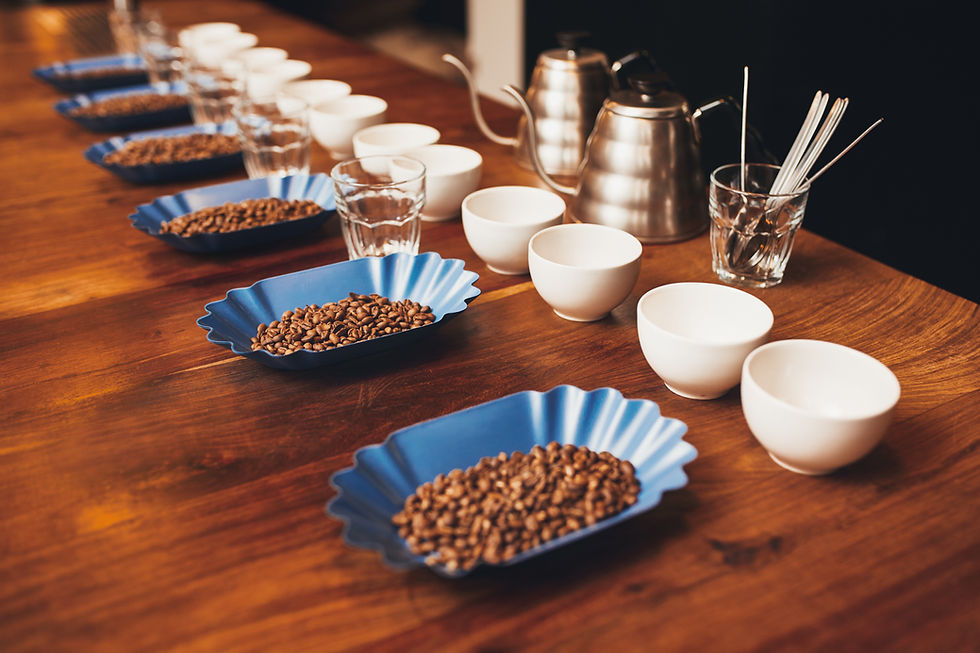
Trinidad Coffee Company's current coffee selection includes light, medium, medium-to-dark, and dark roast options across blends, espressos, and single-origin coffees. Exploring several profiles side by side is a great way to learn what the roast label means in the cup.
Coffee Roast Levels FAQs
What are the main coffee roast levels?
Coffee roast levels are commonly described as light, medium, medium-dark, or dark. These categories indicate general degrees of roast development rather than universally standardized colors or flavor profiles. Individual roasters may define the boundaries somewhat differently.
What is the difference between light, medium, and dark roast coffee?
Light roasting generally preserves more origin-driven aromatics and acidity. Medium roasting allows look balanced sweetness, body, and caramelized characteristics to develop while retaining much of the coffee's identity. Darker roasting makes roast-driven flavors like dark chocolate and dried fruit more prominent while also enhancing depth.
Is dark roast coffee stronger than light roast?
Not necessarily. If strength means beverage concentration, the coffee-to-water ratio and extraction matter more than roast level. Darker coffee can have more obvious roast character, which some drinkers perceive as stronger, but light and medium roasts can also produce highly concentrated, intense cups.
Does dark roast coffee have more caffeine?
Roast level does not impact caffeine level in the final cup. The dose, brew ratio, bean density, beverage size, and brewing method all affect caffeine content. The practical difference between cups comes more from preparation than the roast degree.
How should I choose a coffee roast level?
Use the roast label as a starting point, then consider flavor notes, origin, processing, and brewing method. Comparing different coffees within the same roast category can also help reveal whether the qualities you enjoy come from roast development or from native characteristics of the coffee itself.

Comments