
How to Brew Dark Roast Coffee Without Losing Balance

Updated: Sep 28
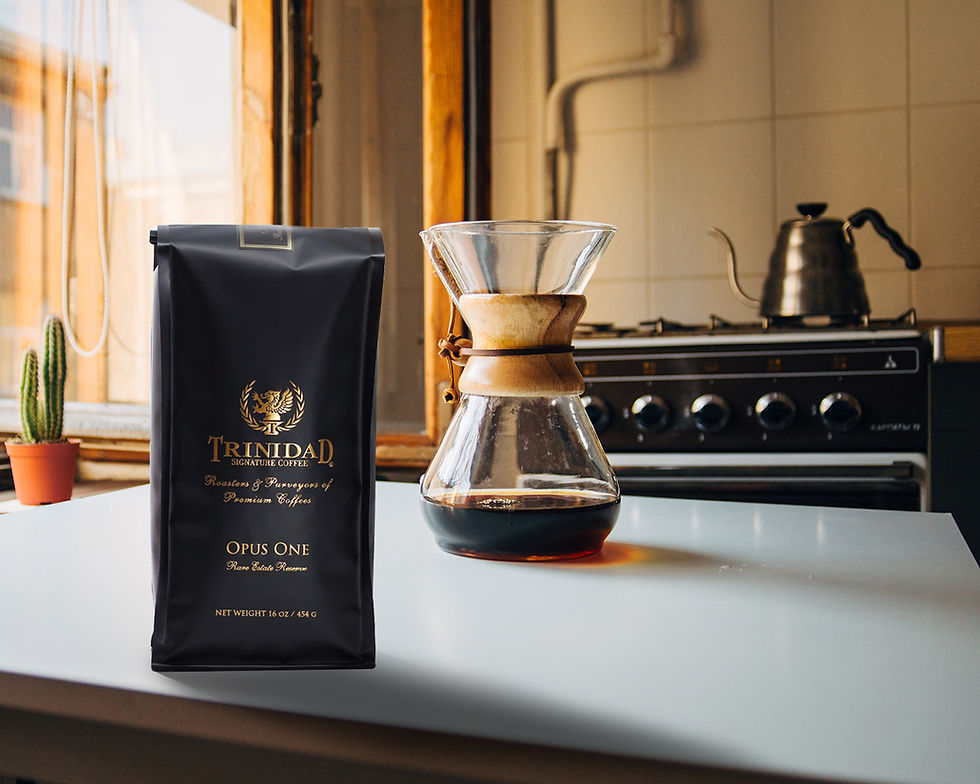
Dark roast coffee can deliver deep sweetness, substantial body, and fully developed roast character, but those same qualities can become heavy or harsh when the brewing method is poorly matched to the coffee. A recipe that works well for a lighter roast may not always produce the same balance with a darker one.
Deeper roasting alters the physical structure of the bean as well as the chemical compounds responsible for flavor and other characteristics. Those changes can affect how water interacts with the coffee grounds and influence which notes are more prominent.
This article from Trinidad Coffee Company focuses on brewing dark roast coffee to preserve sweetness, body, and aroma without allowing bitterness or astringency to dominate the cup. It will show how a darker roast responds to variables like grind, water temperature, contact time, ratio, and brewing method.
Deeper Roasting Changes the Coffee Bean
Roasting does much more than darken the color of coffee beans. Heat drives moisture from the bean, expands its internal structure, and produces chemical reactions responsible for aroma, sweetness, acidity, bitterness, color, and roast character.
As roasting development continues, the bean’s cellular structure becomes more physically altered. Darker beans are generally more porous and less dense than lighter roasted beans. At the same time, the balance of acids, sugars, aromatic compounds, and other characteristics can shift as the batch goes deeper into the roast.
For the home brewer, the key takeaway is that roast level can influence brewing behavior. Dark roast should not automatically be treated as coffee with a deeper shade of brown.
A deeper roast can bring out bittersweet cacao, caramelized, smoky, woody, or spice-like characteristics depending on the origin and roast profile. Trinidad Coffee Company’s Opus One, for example, offers notes of cacao, mahogany, and rosemary that are perfectly developed thanks to its darker roast.
When brewing a dark roast coffee, the goal is to extract those qualities enough to present the full flavor profile while avoiding a cup where bitterness, astringency, or heaviness overwhelms everything else.
Start With Water Temperature to Control Flavor
A higher temperature generally increases the ability of water to dissolve compounds from ground coffee. That does not mean dark roast coffees always require cooler water for brewing, but temperature is worth examining if the cup tastes harsh.
If your favorite dark roast tastes balanced with the temperature you already use, there is no reason to lower it simply because the roast is dark. If the cup repeatedly tastes overly bitter, dry, or burnt despite the right grind and coffee-to-water ratio, a modest reduction in brewing temperature is one practical variable to test.
Avoid dramatic temperature changes. Water that is too cool can leave the cup tasting flat or underdeveloped, particularly when other brewing variables are not adjusted.
Treat temperature as a control rather than a rule. Keep the rest of the recipe the same, lower the temperature slightly, and compare the brewing result. If sweetness becomes more noticeable and the finish less harsh, the adjustment was useful. If the cup becomes dull or weak, go back to the previous temperature setting and consider other brewing variables.
Water quality matters too. When adjusting temperature, use the same water source to determine whether a change in flavor is coming from the brewing technique rather than the water itself.
Set the Grind for the Brewing Method, Then Fine-Tune
Dark roast coffee does not have a universally correct grind size. The brewing method determines the starting point. Espresso requires a much finer grind than French press, and the right particle sizes for drip and pour over generally sit between those two.
Once the grind size matches the brewing method, taste can then guide smaller adjustments.
If a dark roast tastes thin, hollow, or lacks sweetness, the grind may be too coarse for the current recipe. Adjusting the grind slightly finer can increase interaction between water and coffee and may help the cup develop more depth and structure.
Conversely, if the coffee tastes overly bitter, dry, or heavy and the brew is also dripping out too slowly, a slightly coarser grind may improve cup quality.
Whole bean coffee gives the brewer more control because the grind can be paired to the preparation method and ground just before brewing. Trinidad Coffee Company’s whole bean coffee guide explains the broader relationship between grinding, freshness, and extraction.
Grinder design, filter type, dose, water, and brewer geometry all influence flow. A good grind setting is the one that works with your dark roasted beans and the selected brew method to produce a flavor profile that is on point.
Evaluate Contact Time and Ratio Together
Brew time and the coffee-to-water ratio work together to shape concentration and extraction in the cup. Evaluating either of these variables in isolation can lead to unnecessary or ineffective changes in your brewing routine.
A dark roast brewed with a high coffee dose and long contact time may produce a cup that feels very heavy. Flavor that is intense but still pleasant may suit many drinkers’ preferences but if the cup becomes dry or harsh, reducing contact time or using a little more water can soften the result.
The opposite can also be true. Too little coffee or a very short contact period can leave a brew tasting weak even though the roast itself has a bold flavor profile.
For pour over and drip, contact time is influenced by grind size, coffee bed depth, filter medium, and water flow. In a French press, steeping time and grind size are especially important because the coffee grounds remain fully immersed. Espresso combines pressure and a short brewing time to produce a concentrated beverage, so adjustments behave differently.
Instead of aiming for a universal “dark roast ratio”, start with a trusted recipe for the brewing method and evaluate the cup. If the coffee tastes too concentrated but otherwise balanced,the ratio may be the simpler adjustment. If it tastes harsh and strong, then grind size, water temperature, and contact time deserve attention.
Match the Method to the Desired Cup Profile
Various brewing methods can highlight different dimensions of a dark roast coffee’s flavor profile, so choosing the best method depends on the drinking experience you seek.
French press retains more oils and suspended material in the final cup than paper-filtered brewing, which can present a fuller mouthfeel and deeper impression. This suits drinkers who enjoy the depth often associated with darker roasts.
Paper-filtered drip or pour over can produce a cleaner cup. Filtration may make individual flavors easier to distinguish and can keep a dark roast from feeling as heavy.
Espresso concentrates characteristics into a small beverage size, amplifying sweetness, bitterness, body, and roast character. Small changes in dose, grind, and yield can therefore be easier to detect.
Cold brew is another popular brewing option, but it should not be expected to produce the same flavor profile as hot brewing. The stark difference in water temperature changes what is extracted and how the beverage tastes.
Dark roast coffee need not be limited to one style of brewing. Achieving good results depends on choosing the brewing method that will produce the body, clarity, and flavor intensity you seek.
Aim for Flavor Development, Not Maximum Intensity
Many coffee drinkers opt for dark roast to enjoy depth, body, and fully developed roast flavors. Brewing should highlight these characteristics rather than pushing them to their limits.
An ideal cup is rich without being harsh. Bitterness can provide structure without dominating the profile, and smoky, cacao-like, caramelized, woody, or spice-like impressions can remain distinct rather than getting lost in a burnt flavor.
When brewing a dark roast, resist the urge to add more coffee or extend the brew simply because the roast is supposed to be “bold”. Otherwise, you run the risk of the cup being too aggressive. Instead, identify what seems out of balance.
If bitterness and dryness dominate the brew, test a slightly coarser grind, shorter contact period, lower water temperature, or a less concentrated ratio depending on the method. If the cup is weak or shallow, proceed carefully in the opposite direction.
Dark roast should not taste like medium or light roast so do not brew it as such. Dark roast coffee has its own character and many drinkers choose it for that reason. The objective is to brew dark roast so its natural depth is accompanied by sweetness, aroma, and a pleasant finish.
Trinidad Coffee Company’s Art & Science of Trinidad Coffee page provides more context on the ways that sourcing, blending, roasting, and sensory evaluation contribute to the finished coffee.
Use the roast label as context, start with a method-appropriate recipe, and allow the cup profile to guide small adjustments to your brewing techniques. Dark roast coffee does not need to be pushed to extremes to taste full and satisfying.
Explore the current Trinidad Coffee Company coffee selection when you are ready to compare roast profiles and brewing preferences at home.
Dark Roast Coffee FAQs
Should dark roast coffee be brewed at a lower temperature?
Often yes, but not always. If a dark roast tastes balanced at your usual brewing temperature, there is no need to change it. When the cup repeatedly tastes bitter, dry, or harsh, a modest reduction in water temperature can be an effective adjustment to test while keeping other variables the same.
What grind size is best for dark roast coffee?
The right grind size depends on the brewing method. Espresso requires a finer grind, French press uses a coarser grind, and drip or pour over generally falls between them. Adjust gradually according to flow and taste rather than using a universal grind setting for every dark roast.
Why does my dark roast coffee taste bitter?
Bitterness is a natural component of coffee, especially in darker roast profiles. However, excessive bitterness is undesirable and can be influenced by grind size, water temperature, contact time, coffee-to-water ratio, and the roast itself. If the cup is also dry or harsh, make a small adjustment to one or more brewing variables and compare the result.
Is French press good for dark roast coffee?
Yes. French press can work well with dark roast coffee, particularly for drinkers who a enjoy fuller body and heavier mouthfeel. Paper-filtered methods can also work well when more clarity is preferred. The best brewing method depends on the characteristics you want to highlight.
Does dark roast coffee have to taste smoky or burnt?
No. Dark roast coffee can present developed flavors such as cacao, caramelized sweetness, spice, wood, or smoke without tasting burnt. A harsh or ashy cup can reflect a faulty roast profile, flawed brewing approach, or both. A well-balanced dark roast should offer discernable flavors and a pleasant finish.


Comments